Regulated crypto exchanges operate under specific licensing and supervisory frameworks that impose distinct technical and operational requirements beyond those of unregulated platforms. These requirements affect system architecture, custody models, user verification flows, and transaction monitoring infrastructure. This article examines the mechanics of regulatory compliance in exchange design, the trade-offs operators face, and the verification steps practitioners should take before relying on a platform’s regulatory claims.
Licensing Frameworks and Jurisdictional Architecture
Regulatory status depends on the jurisdiction where the exchange holds licenses and where it offers services. Common frameworks include:
- Money Services Business (MSB) or equivalent registration in jurisdictions like the US, Canada, or Australia. These impose anti-money laundering (AML) and know-your-customer (KYC) obligations but often do not include consumer fund protection or solvency requirements.
- Virtual Asset Service Provider (VASP) licenses in the EU (under MiCA), Singapore (MAS), or Hong Kong (SFC). These typically require capital adequacy, segregated custody, and regular audits.
- Securities or derivatives licenses where tokens meet local securities tests or the exchange offers margin products. These may impose position limits, leverage caps, and market surveillance obligations.
Exchanges serving multiple regions often structure operations through separate legal entities, each holding the required local license. A user in France may custody assets with an EU entity while a user in Japan transacts through a registered Japanese entity. This structure affects fund recovery in insolvency scenarios and complicates unified user balance views.
KYC and Identity Verification Flows
Regulated exchanges implement tiered identity verification tied to withdrawal limits or product access. Typical tiers:
- Basic tier: Email and phone verification. May permit small deposits and limited trading but no fiat withdrawals.
- Intermediate tier: Government ID scan, facial biometric match, and address proof. Unlocks higher withdrawal limits and fiat on/off ramps.
- Enhanced tier: Source of funds documentation, tax residency certificates, or accredited investor verification. Required for derivative products, OTC desks, or institutional custody.
The verification process relies on third party identity verification services (IDV) that check documents against issuer databases, perform liveness detection, and screen against sanctions lists. Processing times range from minutes to several days depending on jurisdiction, document quality, and manual review queues.
Practitioners should note that KYC status does not transfer between exchanges. Consolidating assets across platforms requires repeating verification at each venue, and some jurisdictions prohibit certain nationalities or residents from accessing services regardless of verification completeness.
Custody Models and Fund Segregation
Regulatory frameworks often mandate specific custody arrangements:
- Omnibus hot wallets for operational liquidity, typically limited to a percentage of total assets (e.g., 2 to 10 percent) with the remainder in cold storage.
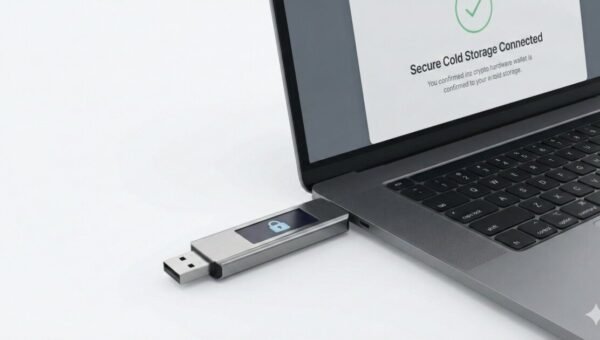
- Segregated cold storage where user funds are held separately from corporate assets, sometimes requiring third party custodian involvement or multi-signature schemes with external signatories.
- Proof of reserves requirements in some jurisdictions, requiring periodic attestations that onchain holdings match user liabilities. Implementation details vary: some jurisdictions accept Merkle tree commitments, others require full audits by licensed accountants.
The custody model affects withdrawal processing times. Cold storage withdrawals may batch once or twice daily, while hot wallet withdrawals process within minutes. Users planning time sensitive trades or arbitrage should verify the exchange’s withdrawal schedule and any manual review thresholds that trigger delays.
Transaction Monitoring and Reporting
Regulated exchanges deploy transaction monitoring systems to detect suspicious activity patterns and generate regulatory reports. Common surveillance mechanisms:
- Threshold based alerts: Transactions exceeding defined amounts (often equivalent to $10,000 or jurisdiction specific thresholds) trigger manual review or automatic suspicious activity reports (SARs).
- Pattern detection: Machine learning models flag structuring behavior (multiple deposits slightly below reporting thresholds), rapid movement between addresses, or trading patterns consistent with wash trading or market manipulation.
- Address screening: Automated checks against sanctions lists, darknet market addresses, and known mixer outputs. Deposits from flagged addresses may be frozen pending investigation.
False positives are common. Legitimate users may experience account freezes or withdrawal delays if their behavior resembles flagged patterns (e.g., consolidating balances before a large purchase, receiving funds from a newly created address). Resolution requires submitting source of funds documentation and can take days to weeks.
Some jurisdictions require exchanges to reject deposits from certain address types (e.g., mixers, privacy coins) even if the user can prove legitimate ownership. This creates a divergence between permissionless onchain activity and permissioned exchange access.
Fee Structures and Maker/Taker Models
Regulated exchanges typically charge trading fees through maker/taker models where passive orders (makers) pay lower fees than aggressive orders (takers). Fee schedules often tier by 30 day volume or account status:
- Retail tiers: Maker fees from 0.10 to 0.50 percent, taker fees from 0.20 to 0.60 percent.
- High volume tiers: Maker fees may drop to zero or become negative (rebates), taker fees from 0.05 to 0.15 percent.
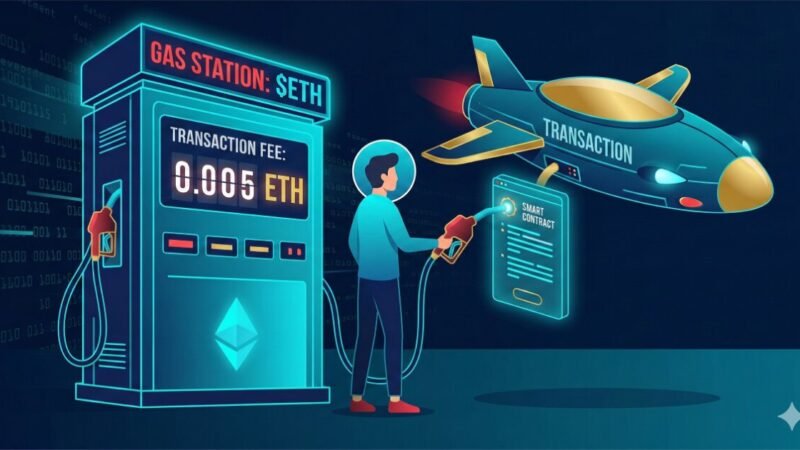
Additional fees apply to fiat deposits (wire transfers, credit cards), fiat withdrawals, and onchain withdrawals (covering miner or gas fees plus a margin). Regulatory costs often manifest as higher withdrawal fees compared to unregulated platforms, reflecting the overhead of compliance staff, audits, and insurance.
Some jurisdictions prohibit zero-fee trading or require minimum tick sizes, limiting the exchange’s ability to compete on fee structures.
Worked Example: Deposit to Trade to Withdrawal Flow
A user in Germany deposits 10,000 EUR via SEPA transfer to a MiCA licensed exchange. The flow:
- Deposit processing: The exchange’s banking partner receives the transfer and credits the user’s account within one business day. The deposit triggers an automatic AML check against the sending bank details.
- Trade execution: The user places a limit buy order for BTC at 40,000 EUR. The order sits in the book as a maker. When filled, the user pays a 0.15 percent maker fee (15 EUR), receiving 0.24625 BTC.
- Withdrawal request: The user requests onchain withdrawal of 0.24625 BTC to a personal hardware wallet. The exchange performs address screening, confirms the destination is not a sanctioned entity, and queues the transaction for the next cold storage batch.
- Cold storage processing: The batch processes 12 hours later. A multisig scheme requires two of three custodian signatories to approve. After signing, the transaction broadcasts with a priority fee targeting next block inclusion. Total withdrawal fee: 0.0005 BTC.
- Confirmation: The user receives 0.24575 BTC at their address within 30 minutes.
If the user had withdrawn to a mixer address, the transaction would have been flagged and potentially rejected with a request to provide an alternative address.
Common Mistakes and Misconfigurations
- Assuming regulatory status in one jurisdiction grants protection globally. An exchange licensed in Malta does not automatically gain passporting rights or consumer protections in non-EU countries. Check the specific license for your residency jurisdiction.
- Not verifying proof of reserves scope. Some exchanges publish proof of reserves only for select assets or exclude certain wallet types. A BTC proof does not guarantee ETH or stablecoin reserves are similarly audited.
- Ignoring withdrawal schedules when planning trades. Cold storage batch processing can delay withdrawals by 12 to 24 hours. Time sensitive arbitrage or DeFi interactions require confirming hot wallet availability or maintaining balances on faster venues.
- Providing incomplete KYC documentation. Uploading a passport photo that crops the machine readable zone or fails to show all four corners will trigger rejection and delay account activation by days.
- Not checking address screening policies before depositing. Sending funds from a CoinJoin output or a newly created address may trigger automatic holds. Where possible, send from a previously used, aged address with clear transaction history.
- Confusing insurance coverage scope. Some exchanges advertise insurance but coverage may apply only to hot wallet hacks, not insolvency, fraud, or cold storage breaches. Read the policy specifics or third party audit summaries.
What to Verify Before You Rely on This
- Current licensing status and jurisdiction. Check the regulator’s public registry directly, not just the exchange’s website claims.
- Proof of reserves publication frequency and methodology. Confirm whether the exchange uses Merkle tree commitments, full audits, or third party attestations, and when the last report was published.
- Custody model for your asset class. Not all tokens receive the same custody treatment. Verify whether your specific asset is held in segregated cold storage or commingled hot wallets.
- Withdrawal processing times and batching schedules. Contact support or check documentation for the typical delay between withdrawal request and onchain broadcast.
- Address screening and sanctions policies. Review the exchange’s terms for prohibited address types and any recent policy changes regarding privacy tools or DeFi protocols.
- Fee schedule tiers and volume requirements. Fee structures change periodically. Confirm current maker/taker rates and any promotions that may expire.
- Insurance coverage details and limits. Verify which scenarios are covered, the coverage limit per user, and the identity of the insurer.
- Jurisdictional restrictions for your residency or citizenship. Some exchanges block entire regions or nationalities even after KYC completion.
- Fiat deposit and withdrawal methods available in your jurisdiction. SEPA, ACH, wire transfer, and card options vary by region and can change as banking partners shift.
- Customer support response times for account freezes or compliance holds. Check recent user reports or the exchange’s published service level agreements.
Next Steps
- Map your regulatory exposure across venues. Document which exchanges you use, their licensing jurisdictions, and how insolvency in each would affect fund recovery under local law.
- Establish a KYC refresh calendar. Some jurisdictions require periodic re-verification or source of funds updates. Set reminders to complete these before they trigger account restrictions.
- Test withdrawal flows with small amounts before consolidating large balances. Confirm address screening does not flag your destination addresses and measure actual processing times under current load.
Category: Crypto Regulations & Compliance