A crypto exchange is a platform that matches buyers and sellers of digital assets, either by maintaining an internal order book (centralized exchanges) or routing orders to onchain liquidity protocols (decentralized exchanges). The architecture you choose determines custody of your private keys, settlement finality, counterparty risk, and regulatory exposure. This article unpacks the mechanical differences between exchange types, the trade-offs practitioners face, and the operational details that matter when executing trades or integrating exchange APIs.
Centralized Exchanges: Custodial Architecture and Internal Settlement
Centralized exchanges (CEXs) operate as traditional financial intermediaries. When you deposit assets, the exchange credits your account balance in an internal ledger. Your private keys transfer to the exchange’s custodial infrastructure, typically a combination of hot wallets for liquidity and cold storage for the majority of holdings.
Trade execution happens entirely offchain. The matching engine pairs buy and sell orders, updates account balances in a database, and only settles netted positions onchain when you withdraw. This architecture enables sub-millisecond latency and supports advanced order types (stop-loss, iceberg, post-only) that require stateful logic incompatible with most blockchain VMs.
Regulatory classification follows from custody. In most jurisdictions, operating a CEX requires money transmitter licenses, KYC/AML compliance infrastructure, and capital reserves. The entity holds customer funds, which creates both legal liability and the operational requirement to maintain fractional or full reserves. Post-FTX (2022), proof of reserves attestations became standard practice, though these only verify liabilities at a snapshot in time and do not confirm solvency under stress.
Decentralized Exchanges: Noncustodial Models and Onchain Settlement
Decentralized exchanges (DEXs) execute trades through smart contracts. Users retain custody of their private keys and interact with liquidity pools or onchain order books via wallet signatures. Settlement occurs atomically in the same transaction as the trade, which eliminates custodial risk but introduces different failure modes.
Automated market makers (AMMs) dominate DEX volume. Liquidity providers deposit token pairs into a pool, and the contract calculates trade prices using a constant function (typically x * y = k for Uniswap v2 style pools). Slippage increases with trade size relative to pool depth, which makes AMMs inefficient for large block trades unless aggregators split the order across multiple pools.
Onchain order book DEXs attempt to replicate CEX UX by maintaining limit orders in contract storage. Performance varies by chain: high throughput L1s and L2s can support near real time matching, while Ethereum mainnet order books often batch updates to manage gas costs. Hybrid models (off-chain order relay with onchain settlement) reduce latency but reintroduce trust assumptions around the relayer’s behavior.
Liquidity and Market Depth Mechanics
CEX liquidity aggregates from market makers who run automated strategies on the exchange’s API. Depth at a given price level reflects standing limit orders, which can be canceled instantly. During volatility, market makers widen spreads or pull orders entirely, which degrades execution quality.
DEX liquidity locks capital in smart contracts. Liquidity providers cannot withdraw mid-trade, which guarantees availability up to the pool’s total value locked. However, impermanent loss (the opportunity cost of holding a rebalancing portfolio versus the constituent tokens) discourages LPs during trending markets, which can drain liquidity when you need it most.
Custody Trade-Offs and Operational Security
Centralized custody consolidates risk. The exchange becomes a single point of failure for hacks, insolvency, or regulatory seizure. Multi-signature cold wallets and hardware security modules mitigate but do not eliminate breach risk. Users forfeit the ability to verify reserve backing in real time.
Noncustodial DEX usage shifts risk to the user’s wallet security and contract audits. A compromised private key or malicious token approval grants an attacker full access to your wallet. Smart contract exploits (reentrancy, oracle manipulation, logic bugs) can drain liquidity pools, though reputable DEXs undergo multiple audits and maintain bug bounty programs.
Worked Example: Cross-Exchange Arbitrage Execution
You identify a price discrepancy: ETH trades at 2,000 USDC on CEX A and 2,010 USDC on DEX B. The arbitrage requires simultaneous execution to avoid directional risk.
On CEX A, you place a market buy for 10 ETH. The matching engine executes instantly, debiting 20,000 USDC from your account and crediting 10 ETH. No onchain transaction occurs yet.
On DEX B, you submit a transaction swapping 10 ETH for USDC via an AMM pool. The transaction enters the mempool, where a searcher running MEV infrastructure detects the arbitrage and submits a competing transaction with higher gas. Your transaction confirms second, but slippage from the searcher’s front-running trade reduces your proceeds to 19,950 USDC. The net arbitrage fails after gas costs.
To execute successfully, you would need to: (1) use a private mempool service to hide the DEX transaction, (2) split the trade across multiple pools to reduce per-pool price impact, or (3) accept the CEX execution risk of holding ETH exposure during DEX confirmation time.
Common Mistakes and Misconfigurations
- Leaving assets on CEXs indefinitely. Exchanges are not wallets. Withdraw to self custody between active trading periods to eliminate platform risk.
- Ignoring token approval amounts on DEXs. Approving unlimited spending lets the contract (or a compromised contract upgrade) drain your wallet. Set approvals to the exact trade amount or revoke after execution.
- Assuming DEX prices reflect global markets. Isolated liquidity pools can diverge significantly from CEX prices, especially for low volume pairs. Always compare quotes across aggregators.
- Using market orders during volatility on thin order books. Partial fills at progressively worse prices can execute 10 percent or more above the quote price. Use limit orders with tight constraints.
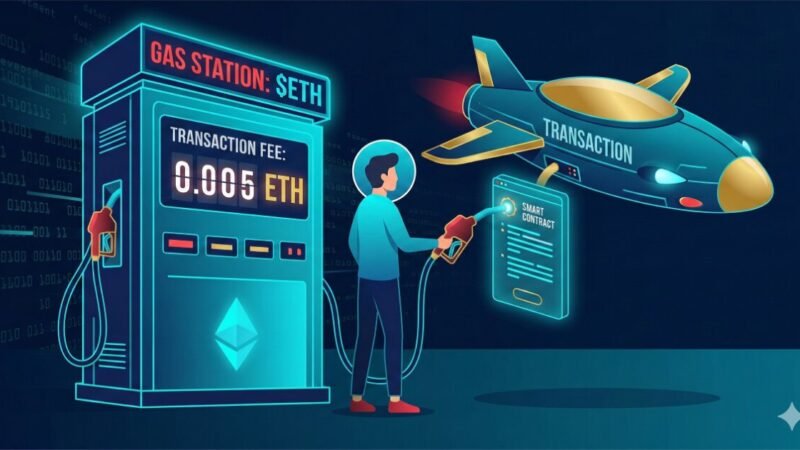
- Neglecting gas price dynamics for time-sensitive DEX trades. A low gas bid may cause confirmation delays that invalidate the trade logic. Monitor network congestion and adjust priority fees accordingly.
- Relying on CEX API rate limits without backoff logic. Bursting through API quotas gets your key throttled or banned, which breaks automated strategies mid execution.
What to Verify Before You Rely on This
- Current reserve attestation date and auditor for any CEX holding significant balances. Verify the attestation covers all liability categories, not just selected assets.
- Smart contract audit reports and active bug bounty programs for DEXs. Check deployment addresses against official documentation to avoid phishing contracts.
- Withdrawal processing times and minimum thresholds on CEXs. Some platforms batch withdrawals or impose 24 hour holds on first time addresses.
- Gas token requirements for the DEX’s deployment chain. Trading on Arbitrum requires ETH for gas even when swapping non-ETH pairs.
- Order book depth at your intended trade size. A quoted spread may only apply to the first 1 percent of your order.
- Liquidity pool composition and total value locked. AMM pools rebalance continuously. A pool that was balanced yesterday may be 80 percent of a depreciating token today.
- Regulatory restrictions by jurisdiction. Some CEXs block IP ranges or require additional verification for certain regions. DEXs may restrict frontend access but cannot prevent direct contract interaction.
- Fee schedules for maker/taker on CEXs and swap fees plus gas on DEXs. Tiered fee structures on CEXs reward volume, while DEX costs scale with network congestion independent of trade size.
- API stability and historical uptime if integrating programmatically. Exchanges experiencing load shedding during volatility will fail your execution logic.
- Token standard compatibility. Not all DEXs support every token type (ERC-20, ERC-721, wrapped assets). Confirm the pool or pair exists before initiating transfers.
Next Steps
- Test withdrawal flows on any CEX before depositing trading capital. Execute a small withdrawal to your own wallet and confirm you control the process end to end, including 2FA and address whitelisting if enabled.
- Simulate DEX trades using a testnet or tenderly.co transaction simulator. Verify gas costs, slippage, and final output amounts before committing mainnet funds.
- Set up monitoring for abnormal exchange behavior. Track reserve ratios via public APIs, watch for unusual withdrawal delays, and subscribe to security incident feeds for both CEXs and the smart contracts you interact with.