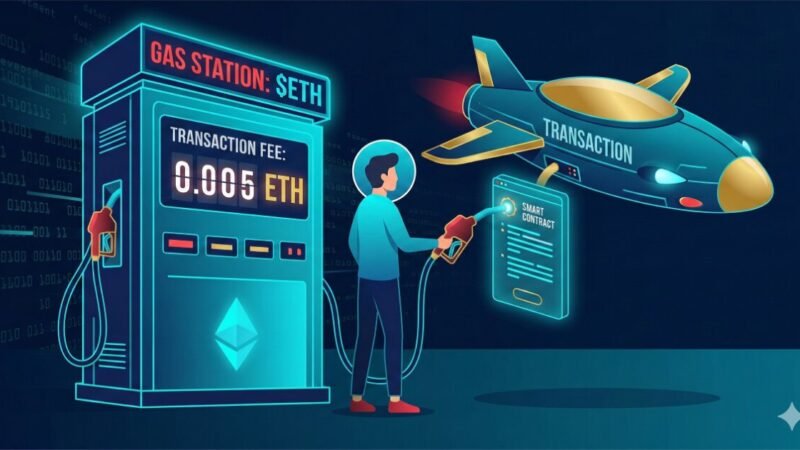
US crypto exchanges operate under fragmented state and federal oversight, making platform selection a matter of custody architecture, fee structure, liquidity depth, and regulatory posture rather than simple feature lists. This article breaks down the decision dimensions that matter for practitioners choosing where to custody assets, execute trades, or integrate API workflows.
Custody Model and Asset Segregation
Exchanges serving US users must navigate FinCEN money service business registration, state money transmitter licenses, and varying interpretations of custody. Most platforms use an omnibus wallet structure where customer assets sit in pooled hot and cold wallets controlled by the exchange, with balances tracked internally in a database.
Some exchanges maintain qualified custodian relationships under state trust charters or use third party custodians holding insurance policies. The difference surfaces during insolvency. If customer assets are commingled with operational funds or lent out without explicit consent, bankruptcy proceedings may treat deposits as unsecured creditor claims rather than segregated property.
Check whether the platform publishes proof of reserves attestations or onchain wallet addresses. Verify if your assets remain onchain in your favor or if the exchange issues synthetic IOUs backed by fractional reserves. Platforms using full reserve banking publish merkle tree snapshots linking account balances to verified onchain addresses. Those without transparent reserve practices create counterparty exposure identical to traditional broker insolvency risk.
Fee Transparency and Execution Quality
Maker and taker fees typically range from 0.00% to 0.60% depending on 30 day rolling volume. High volume accounts negotiate flat fee tiers or rebates. The posted fee schedule matters less than total execution cost, which includes slippage, spread, and routing inefficiency.
Compare the same market order across platforms using identical size and timing. A platform advertising lower fees but routing through thin order books may deliver worse net pricing than a competitor charging higher fees but accessing deeper liquidity pools or internalized flow. Some exchanges earn revenue by selling order flow to market makers who provide price improvement in exchange for information leakage.
For API traders, examine rate limits, WebSocket latency, and whether the matching engine uses price-time priority or pro rata allocation during heavy volume. Exchanges using cloud infrastructure generally exhibit higher tail latency than those operating colocated matching engines. If you run statistical arbitrage or market making strategies, request historical trade and quote data to backtest execution assumptions.
Liquidity Depth and Market Structure
Order book depth determines how much size you can trade without moving the market. An exchange may list 200 pairs but only provide meaningful liquidity in BTC, ETH, and stablecoin pairs. Check the 1% and 2% market depth (the notional amount of bids and asks within 1% or 2% of mid price) for the assets you trade.
Some platforms operate as principal liquidity providers, taking the opposite side of customer orders and hedging inventory externally. This reduces latency and spread but introduces conflicts of interest if the exchange trades against informed flow. Disclosed agency models route orders to external liquidity pools or match customers peer to peer without taking principal risk.
For large block trades, verify if the platform offers OTC desks with settlement through the same custody infrastructure. OTC desks typically provide tighter spreads and reduced market impact for sizes above $100,000 but require identity verification and sometimes impose lock up periods for certain assets.
Regulatory Compliance Posture
Exchanges operating under New York’s BitLicense, Wyoming’s SPDI charter, or as federally chartered trust companies face stricter capital requirements, audit regimes, and permissible asset lists compared to platforms operating only under FinCEN MSB registration and scattered state MTL licenses.
Compliance posture affects which assets appear on the platform. Exchanges with more conservative legal interpretations delist tokens that might be classified as securities under the Howey test, while others maintain broader asset selection pending enforcement action. This creates basis risk: a token available today may be delisted tomorrow, forcing liquidation at unfavorable prices or requiring emergency withdrawals.
Know Your Customer and Anti Money Laundering procedures vary. Minimum tiers often allow $1,000 to $10,000 daily withdrawal limits with government ID. Enhanced tiers requiring proof of address and source of funds unlock higher limits. Some platforms implement transaction monitoring that flags deposits from mixers, gambling sites, or sanctioned addresses, potentially freezing accounts pending investigation.
Worked Example: Cost Calculation for a $50,000 BTC Purchase
Assume you want to convert $50,000 USDC to BTC using a market order during moderate volatility.
Platform A lists a 0.20% taker fee. The order book shows $200,000 of asks within 0.1% of mid price. Your order fills at an average of 0.08% above mid due to slippage. Total cost: ($50,000 x 0.20%) + ($50,000 x 0.08%) = $100 + $40 = $140.
Platform B charges 0.35% taker fee but maintains $2,000,000 of depth within 0.1%. Your order fills at 0.02% above mid. Total cost: ($50,000 x 0.35%) + ($50,000 x 0.02%) = $175 + $10 = $185.
Despite higher posted fees, Platform B delivers better execution. For recurring DCA strategies, negotiate monthly volume discounts or use limit orders to capture maker rebates.
API Integration and Infrastructure Reliability
Professional users need REST and WebSocket APIs with reliable authentication, predictable rate limits, and stable message formats. Evaluate API documentation completeness, availability of testnet environments, and whether the platform maintains backward compatible versioning.
Examine historical uptime during high volatility events. Exchanges that halt trading, disable withdrawals, or suffer matching engine failures during price crashes introduce operational risk. Request SLAs for API availability and data feed latency if you run automated strategies dependent on continuous market access.
Check whether the platform supports FIX protocol for institutional connectivity. Some exchanges offer colocation or cloud proximity hosting to reduce network round trip time for latency sensitive strategies.
Common Mistakes and Misconfigurations
- Leaving large balances in hot wallets indefinitely. Exchanges typically keep only 2% to 5% of assets in hot wallets for operational liquidity. Your funds may rotate between hot and cold storage based on withdrawal demand, but you bear the risk if the hot wallet is compromised.
- Ignoring withdrawal processing times. Blockchain withdrawals may batch once daily or require manual approval above certain thresholds. Verify the actual time to finality, not just the stated processing window.
- Assuming FDIC or SIPC insurance applies. These protections cover bank deposits and securities, not crypto balances. Exchange insurance policies, if any, typically cover only hot wallet hacks, not insolvency or fraud.
- Trading illiquid pairs without limit orders. Market orders on thin books can fill 5% to 10% away from last price, creating immediate losses larger than typical daily volatility.
- Failing to whitelist withdrawal addresses. Enable address whitelisting with a time lock delay to prevent immediate theft if your account is compromised.
What to Verify Before You Rely on This
- Current maker and taker fee schedules at your expected volume tier
- Real time order book depth for your specific trading pairs
- Latest proof of reserves attestation date and methodology
- Jurisdictional licenses and regulatory status in your state
- Withdrawal processing times and daily/monthly limits at your KYC tier
- Insurance coverage terms, exclusions, and policy limits
- API rate limits, historical uptime percentages, and incident response times
- Supported deposit and withdrawal networks for each asset
- Whether the platform lends customer assets or uses them for liquidity provisioning
- Current list of supported assets and recent delistings
Next Steps
- Open small test accounts on two to three platforms and execute identical trades to compare total execution cost including slippage.
- Request API keys and test rate limits, latency, and data feed reliability in a staging environment before committing production capital.
- Review the platform’s terms of service for arbitration clauses, liability caps, and account freeze procedures to understand your legal position during disputes.
Category: Crypto Exchanges