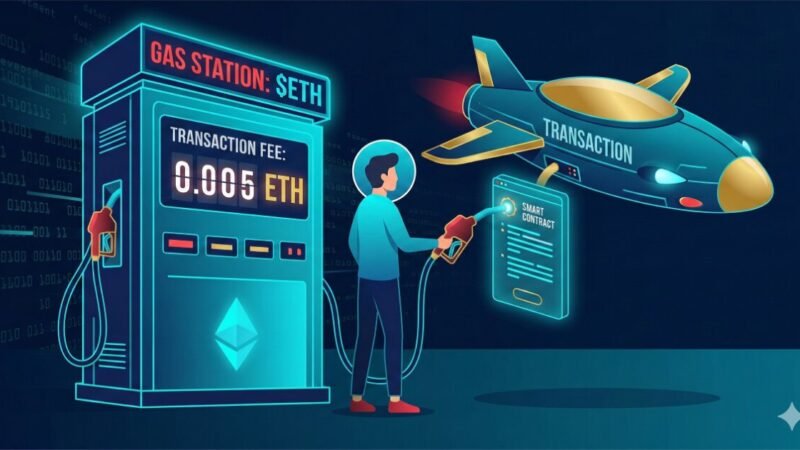
Exchanges and wallets form the custody layer of crypto infrastructure. The distinction matters less for casual observers than for practitioners who need to understand how private key management, settlement rails, and API integration choices affect liquidity access, counterparty risk, and operational complexity. This article examines the architectural differences between exchange custody and standalone wallets, the technical trade-offs in each model, and how they interact when building integrated workflows.
Exchange Custody: Pooled Accounts and Internal Ledgers
Centralized exchanges operate custodial wallets where user balances exist as database entries rather than discrete onchain addresses. When you deposit ETH to Coinbase or Binance, the exchange credits your account internally and sweeps incoming funds into a pooled hot or cold wallet. Withdrawals trigger the reverse: the internal ledger debits your balance, and the exchange broadcasts a transaction from its pooled address.
This architecture enables instant settlement for trades between users on the same platform. If Alice sells BTC to Bob on the same exchange, the trade settles in milliseconds by updating two database rows. No blockchain confirmation delay, no gas fees, no mempool congestion. The trade-off is counterparty risk: users rely on the exchange to honor withdrawal requests and maintain sufficient reserves. The FTX collapse in 2022 demonstrated how commingled funds and inadequate reserves can evaporate customer balances overnight.
Some exchanges offer segregated accounts or proof of reserves mechanisms. Segregated accounts maintain a 1:1 mapping between user balances and onchain UTXOs or addresses, though this is rare at scale due to the operational overhead. Proof of reserves publishes Merkle trees of liabilities alongside cryptographic proofs of onchain holdings, allowing users to verify their balance appears in the tree and that total assets exceed liabilities. Verify the audit frequency and whether liabilities include all claims, including margin positions and derivatives exposure.
Noncustodial Wallets: Key Management and Transaction Construction
Noncustodial wallets give users direct control of private keys. MetaMask, Ledger, and similar tools store keys locally (browser extension, hardware device, or mobile secure enclave) and sign transactions client side before broadcasting. The wallet software constructs the transaction, fetches current gas prices and nonce values from an RPC endpoint, and presents the unsigned payload for approval.
This model eliminates exchange counterparty risk but shifts operational burden to the user. You manage key backups, handle transaction construction errors, and absorb gas costs for every onchain operation. Wallet software typically connects to third party RPC providers (Infura, Alchemy) or runs a local node. RPC reliability and rate limits become your problem. If the provider is down or rate limits your requests, transaction broadcasting fails even though your keys are secure.
Hardware wallets add a signing device that never exposes the private key to the internet. The host computer or phone constructs the transaction, sends it to the hardware device over USB or Bluetooth, and the device displays transaction details on a trusted screen before signing. This breaks phishing attacks that trick users into signing malicious payloads. The trade-off is UX friction: every transaction requires physical device interaction.
Hybrid Models: Exchange Linked Wallets and Embedded Custody
Some platforms blur the custody boundary. Coinbase Wallet operates as a noncustodial mobile app but offers optional cloud backup of encrypted seed phrases. Users can restore access via Coinbase account credentials, introducing a custodial recovery path. This reduces irreversible loss risk but reintroduces a trusted third party.
Embedded wallet SDKs (Dynamic, Privy, Magic) let applications create wallets on behalf of users, often using email or social login as the recovery mechanism. The SDK provider manages key shards or threshold signatures in the background. Users interact with a familiar login flow, and the application can sponsor gas fees or bundle transactions. The architecture typically involves multi party computation (MPC) where key material is split between the user device, the SDK provider, and sometimes the application backend. No single party holds the full key, but collusion or SDK provider failure can lock funds.
Transaction Flow Example: Exchange Withdrawal to DeFi Protocol
You hold 10 ETH on a centralized exchange and want to supply liquidity to Uniswap v3. The exchange wallet holds your balance as an internal ledger entry in a pooled address. You initiate a withdrawal to your MetaMask address. The exchange queues your request, performs AML checks, and eventually broadcasts a transaction from its hot wallet. Confirmation time depends on gas price the exchange selects and current network congestion. Typical exchanges batch withdrawals to save gas, introducing additional delay.
Once the ETH arrives in your MetaMask address, you connect the wallet to the Uniswap web interface. MetaMask fetches your ETH balance from its configured RPC endpoint. You specify liquidity parameters (price range, token pair) and click supply. The Uniswap interface constructs a transaction calling the position manager contract, estimates gas, and prompts MetaMask to sign. You review the transaction details, confirm, and MetaMask broadcasts. The transaction settles onchain after block confirmation, and the position NFT mints to your address.
This workflow crosses three custody domains: exchange internal ledger, exchange hot wallet, and your noncustodial wallet. Each transition introduces latency, gas costs, and potential failure points (exchange withdrawal delay, RPC downtime, insufficient gas estimation).
Common Mistakes and Misconfigurations
- Using exchange deposit addresses as long term storage. Most exchanges rotate deposit addresses or use batched settlement scripts. Sending funds to an old address may result in delayed crediting or require manual support intervention.
- Ignoring contract interaction warnings in wallet UIs. Wallet software highlights when a transaction calls an unfamiliar contract. Approving blindly exposes you to unlimited token approvals or malicious contract logic.
- Setting RPC endpoints to free tier providers without fallback. Rate limiting or outages will block transaction broadcasting. Configure multiple RPC endpoints or run a local node for critical workflows.
- Assuming instant finality on withdrawal. Exchange withdrawal times vary based on hot wallet liquidity, manual approval thresholds, and blockchain congestion. Plan for delays when time sensitive execution matters.
- Neglecting to verify contract addresses before signing. Phishing sites clone DeFi UIs and inject malicious contract addresses. Cross reference against official documentation or onchain registry contracts.
- Storing seed phrases in cloud note apps or password managers without additional encryption. Compromised accounts give attackers direct access to recovery phrases.
What to Verify Before You Rely on This
- Current withdrawal fee structure and minimum thresholds for your exchange. Some networks have dynamic fees or temporarily suspend withdrawals during congestion.
- Whether the exchange batches withdrawals and typical processing latency for your asset and network.
- RPC provider rate limits and uptime SLA if using a third party service. Check for status pages and historical incident data.
- Hardware wallet firmware version and known vulnerabilities. Ledger and Trezor publish security advisories when issues are discovered.
- Wallet software’s contract interaction database freshness. Out of date warning lists may not flag newly deployed malicious contracts.
- Proof of reserves methodology if relying on exchange solvency claims. Confirm whether liabilities include derivatives and whether reserves are overcollateralized.
- Whether your wallet supports EIP-1559 transaction types and can handle priority fee estimation during high congestion.
- Token approval amounts granted to contracts. Use tools like Revoke.cash or Etherscan’s token approval feature to audit existing permissions.
- Backup and recovery procedures for your wallet type. Test recovery on a secondary device before relying on backups.
- Whether your exchange participates in any insurance fund or compensation scheme for custody failures, and the coverage limits.
Next Steps
- Audit your current exchange balances and evaluate whether any holdings exceed amounts you are comfortable exposing to counterparty risk. Consider partial withdrawal to a noncustodial wallet for long term holdings.
- Configure at least two RPC endpoints in your primary wallet software. Test failover by temporarily disabling the primary endpoint and verifying transactions still broadcast.
- Review token approvals granted to DeFi protocols in your active wallets. Revoke unlimited approvals and replace with bounded amounts appropriate to your usage pattern.