Building a crypto exchange is an infrastructure project that exposes you to regulatory, security, and liquidity challenges before you process a single order. This guide walks through the technical and compliance architecture required to launch a centralized exchange (CEX) or hybrid model, focusing on the decision points that determine your operational risk profile and capital requirements.
Centralized vs. Hybrid Architecture
A centralized exchange handles custody, order matching, and settlement internally. Users deposit crypto into exchange-controlled wallets, and trades execute against an internal order book or liquidity pool without broadcasting to any blockchain until withdrawal. This design minimizes latency and allows you to net trades offchain, but requires you to secure hot and cold wallet infrastructure and comply with money transmission or financial services licensing.
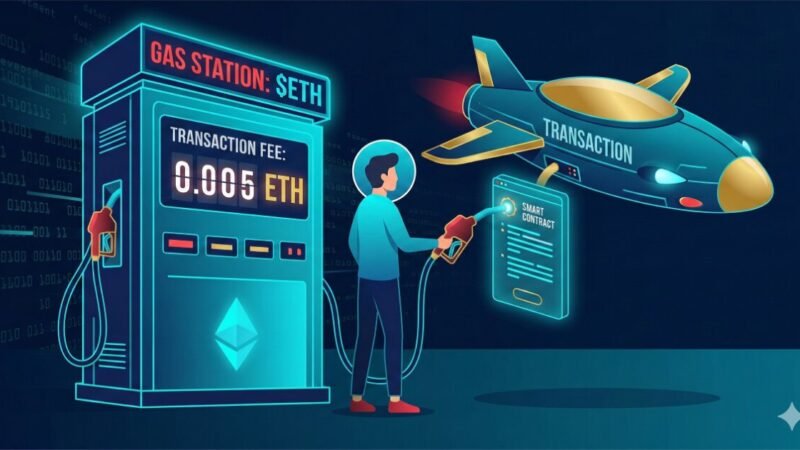
A hybrid model (sometimes called a noncustodial CEX) uses smart contracts for settlement while maintaining a centralized order book. Users retain custody until a trade executes, at which point the contract atomically swaps assets. This reduces your regulatory surface area in some jurisdictions, but introduces onchain latency and gas costs that limit high frequency activity.
Decentralized exchanges (DEXs) eliminate your custody and matching responsibilities entirely, but that architecture falls outside the scope of building an exchange as an operator. If you are evaluating whether to build a CEX or integrate with existing DEX protocols, the trade-off centers on whether you want to compete on execution speed and fiat onramps or on censorship resistance and composability.
Custody and Wallet Infrastructure
Your wallet architecture determines both security posture and withdrawal latency. A standard setup separates funds into hot wallets (online, immediately accessible), warm wallets (online but requiring multisig approval), and cold wallets (offline, airgapped hardware or paper storage).
Hot wallets typically hold 2 to 5 percent of total assets under management, enough to process same-block withdrawals during normal activity. Warm wallets hold another 10 to 20 percent and require two or three signatories, with private keys stored on separate hardware security modules (HSMs) or YubiHSM devices. Cold storage holds the remainder and should involve geographic distribution, multisig schemes with M-of-N thresholds (often 3-of-5 or higher), and documented retrieval procedures that assume partial key loss.
You must implement automated rebalancing that moves funds from cold to warm to hot as withdrawal demand fluctuates, while maintaining minimum thresholds that trigger manual intervention. This rebalancing cadence (hourly, daily, or event-driven) directly affects your exposure window during a breach.
Order Matching and Settlement Engine
The matching engine is your performance bottleneck. It must ingest orders, apply priority rules (typically price-time priority), execute matches, and update account balances within milliseconds to remain competitive. Most production engines run in-memory and persist state to a write-ahead log (WAL) that replays on restart.
You choose between a fully synchronous engine (every match commits to the database before acknowledging) or an asynchronous model (matches acknowledge immediately, with database writes lagging by milliseconds). Synchronous designs prevent data loss during crashes but cap throughput at your database commit latency, typically a few thousand orders per second. Asynchronous designs scale to tens of thousands of orders per second but require reconciliation logic to handle race conditions if the process crashes mid-match.
Settlement happens offchain for CEX models. Your ledger credits and debits user accounts, and you only touch the blockchain for deposits and withdrawals. This means you must maintain an internal double-entry accounting system that guarantees balances never go negative and that total liabilities (user balances) never exceed reserves. Publish a real-time proof of reserves or Merkle tree commitment if you want users to independently verify solvency.
Liquidity Bootstrapping
A new exchange faces a cold start problem. Market makers will not commit capital to an order book with no volume, and retail users will not trade on an exchange with wide spreads and thin depth. You solve this by either seeding liquidity yourself (expensive and risky) or integrating as a taker to established exchanges via API, routing user orders to Binance, Coinbase, or Kraken and capturing a spread.
Alternatively, negotiate market maker agreements where professional firms commit to maintaining bid-ask spreads within a specified range (for example, 10 basis points on BTC/USDT) in exchange for reduced or zero trading fees. These contracts often require minimum uptime guarantees and penalties if spreads widen beyond the threshold. Evaluate whether you want exclusive market makers (simpler coordination, less competition) or multiple firms (better redundancy, tighter spreads).
Another approach involves liquidity aggregation, where your engine queries multiple DEXs and CEXs to fill orders at the best available price. This works for smaller exchanges but introduces execution risk if upstream sources reject your order after you have already confirmed to the user.
Worked Example: Deposit and Trade Flow
A user deposits 1 BTC to your exchange. They generate a unique deposit address linked to their account. Your wallet sweeper monitors the Bitcoin mempool and credits the user’s account after N confirmations (commonly six for Bitcoin, translating to roughly 60 minutes). The BTC moves from the deposit address into your hot wallet via a sweep transaction every 10 minutes or when the accumulated balance exceeds a threshold like 0.5 BTC.
The user places a limit order to sell 1 BTC at 42,000 USDT. Your matching engine inserts this order into the BTC/USDT order book. Another user submits a market buy for 0.5 BTC. The engine matches 0.5 BTC of the limit order, debits 0.5 BTC from the seller’s account, credits 21,000 USDT minus a trading fee (for example, 0.1 percent, or 21 USDT), debits 21,000 USDT from the buyer, and credits 0.5 BTC minus the fee (0.0005 BTC). The remaining 0.5 BTC limit order stays on the book.
If the user withdraws the 21,000 USDT, your system checks the hot wallet balance. If sufficient, it broadcasts a transaction from the hot wallet to the user’s external address and marks the withdrawal pending. After the transaction confirms onchain, you mark it complete. If the hot wallet lacks funds, the withdrawal enters a queue and triggers a rebalancing job to move USDT from warm or cold storage.
Licensing and Regulatory Checkpoints
Operating an exchange typically requires a money transmitter license (MTL) in the United States, regulated by each state plus FinCEN at the federal level. Expect 12 to 24 months and six to seven figures in legal and compliance costs to register in all states. Some states (New York, Texas, Washington) impose capital reserve requirements or bonding minimums.
Outside the United States, many jurisdictions require a virtual asset service provider (VASP) license or equivalent. The European Union’s Markets in Crypto-Assets (MiCA) regulation, effective in phases starting 2024, mandates authorization for exchanges operating within member states. Singapore’s MAS, Hong Kong’s SFC, and Japan’s FSA each impose distinct registration and operational requirements.
You must implement Know Your Customer (KYC) and Anti-Money Laundering (AML) procedures, including identity verification (government ID, proof of address), transaction monitoring for suspicious patterns, and Suspicious Activity Report (SAR) filings. Most exchanges integrate third party KYC providers (Jumio, Onfido, Chainalysis) rather than building these systems internally.
Travel Rule compliance (FATF Recommendation 16) requires you to collect and share originator and beneficiary information for transactions above a threshold, commonly 1,000 USD or EUR. This applies to transfers between exchanges, not to user withdrawals to personal wallets, though interpretation varies by jurisdiction.
Common Mistakes and Misconfigurations
- Insufficient hot wallet monitoring. Failing to set up real-time alerts when hot wallet balances drop below thresholds or when unexpected withdrawals occur. Many breaches go undetected for hours because monitoring relies on daily batch reconciliation instead of per-transaction checks.
- Allowing negative balances. A race condition between the matching engine and the balance check can allow users to trade more than they hold, especially under high load. Always lock balances before executing a trade and reject orders atomically if insufficient funds exist.
- Single signature hot wallets. Using a single private key for hot wallet withdrawals eliminates a critical control layer. Even automated withdrawals should require at least 2-of-3 multisig approval, with keys on separate servers or HSMs.
- No withdrawal velocity limits. Allowing unlimited withdrawals per hour or day enables attackers to drain funds quickly if they compromise an account. Impose per-user, per-asset, and aggregate velocity limits with manual approval for amounts exceeding thresholds.
- Hardcoded confirmation counts. Setting a fixed six confirmations for all deposits without adjusting for chain reorganization risk or block time changes. Smaller cap assets with lower hashrate require deeper confirmation counts, sometimes 50 or 100 blocks.
- Skipping proof of reserves. Users cannot verify solvency without periodic Merkle tree publication or zk proof of reserves. Implement automated monthly or weekly proofs that commit to liabilities (user balances) and prove reserves (wallet holdings) exceed them.
What to Verify Before You Rely on This
- Current money transmitter licensing requirements in every jurisdiction where your users reside, including states that have introduced new crypto-specific licensing since 2023.
- FinCEN guidance on whether your custody model classifies as a money services business (MSB) or qualifies for any exemptions.
- The specific MiCA authorization category you fall under (crypto asset service provider, e-money institution, or credit institution) and the corresponding capital requirements.
- Whether your target chains (Ethereum, Solana, Polygon) have experienced recent consensus changes that affect recommended confirmation counts for deposits.
- API rate limits and connectivity stability for any upstream exchanges you integrate for liquidity aggregation or order routing.
- The current market rate for market making agreements, including typical fee rebates and spread commitments, as these shift with overall market liquidity conditions.
- Insurance availability and premium costs for custodial crypto assets, as coverage terms and underwriters change frequently.
- The exact multisig threshold and key storage standards required by your insurer or auditor, as these often exceed baseline security recommendations.
- Transaction monitoring rules flagged as high priority by your AML vendor or regulatory guidance updates, particularly for mixing services, sanctioned addresses, or high-risk jurisdictions.
- Your chain-specific fee estimation logic, ensuring you dynamically adjust gas prices or sat/byte rates based on mempool congestion rather than static values.
Next Steps
- Draft a compliance roadmap that lists every jurisdiction you plan to serve and maps each to its licensing authority, application timeline, and capital requirement. Prioritize states or countries where you expect the majority of your user base.
- Build or integrate a testnet version of your matching engine and custody system. Simulate order flow, deposit sweeps, and withdrawal requests under load to identify bottlenecks and race conditions before mainnet launch.
- Engage a crypto-focused law firm and a specialized auditor (SOC 2 Type II for custody, plus blockchain-specific pen testing) at least six months before your target launch date. Licensing delays and audit remediation cycles extend timelines significantly.
Category: Crypto Exchanges