Linea is a type 2 zkEVM layer 2 rollup developed by ConsenSys that went live on mainnet in 2023. It targets EVM bytecode compatibility while generating zero knowledge proofs for state transitions, positioning itself as an environment where existing Ethereum tooling and contracts can deploy with minimal modification. This article covers the technical mechanics, proof system characteristics, bridge security model, and operational considerations for developers and users evaluating Linea for production use.
zkEVM Type Classification and Compatibility Trade-Offs
Linea implements a type 2 zkEVM in Vitalik Buterin’s taxonomy. It proves EVM bytecode execution directly rather than requiring recompilation to a custom VM, but makes small modifications to hash functions and state tree structures to improve proving efficiency. This means most Solidity contracts deploy without changes, but certain precompiles and opcodes behave differently than on Ethereum mainnet.
The proving circuit does not support all Ethereum precompiles natively. Contracts relying on MODEXP for RSA signature verification or certain elliptic curve operations outside the BN254 pairing may encounter higher gas costs or revert. Developers porting contracts that use blake2f or other non-standard precompiles should verify support in the Linea documentation or test on the public testnet before mainnet deployment.
State tree structures use Merkle Patricia Tries compatible with Ethereum, but internal hashing within the prover uses Poseidon and other SNARK friendly primitives. This dual structure keeps RPC compatibility high while allowing the prover to generate proofs in reasonable time. Proof generation for a full block on Linea hardware typically completes in minutes to tens of minutes depending on transaction density, a constraint that influences sequencer batch finalization cadence.
Proof System and Finality Mechanics
Linea uses a PLONK based proving system with recursion. The sequencer batches transactions, executes them, generates a witness, and submits the resulting state root to the L1 Verifier contract on Ethereum. The prover generates a zero knowledge proof attesting that the new state root follows correctly from the previous root and the transaction batch. Once this proof verifies onchain, the batch achieves L1 finality.
The system operates in two phases: soft finality and hard finality. Soft finality occurs when the sequencer commits a batch to L1 without the proof. Users see transactions confirmed and can track them via block explorers, but the state is not yet immutable. Hard finality arrives when the proof posts and verifies. The gap between these phases has varied from minutes to hours depending on network load and prover throughput.
For most users, soft finality suffices for low value transactions and application interactions. Exchanges and bridge operators typically wait for hard finality before crediting deposits or releasing large value transfers. This waiting period introduces latency compared to optimistic rollups that finalize withdrawals after a 7 day challenge window but do not require proof generation upfront.
Canonical Bridge and Message Passing
The Linea bridge operates as a canonical message passing layer secured by the same proof system that validates state transitions. Users lock tokens in the L1 bridge contract, and the sequencer mints corresponding tokens on L2 after observing the deposit transaction. Withdrawals reverse the process: users burn L2 tokens, the sequencer includes the burn in a batch, and once the batch proof verifies, users can claim their L1 tokens.
The bridge contract enforces a rate limit mechanism to cap the total value withdrawable in a given time window. This limits the blast radius of a sequencer compromise or prover bug. The rate limit parameters are governance controlled and have been adjusted post-launch. Developers building applications that require large or frequent withdrawals should monitor these thresholds and design fallback flows if a user withdrawal exceeds the available limit.
Message passing supports arbitrary calldata, enabling crosschain contract calls. A contract on Ethereum can send a message that triggers execution on Linea, and vice versa. The message must wait for the proof to finalize before execution on the destination chain. This latency makes synchronous crosschain calls impractical, but asynchronous patterns like queued orders or delayed settlement work well.
Sequencer Centralization and Censorship Resistance
As of its mainnet launch, Linea operates a single sequencer controlled by ConsenSys. Users submit transactions to this sequencer, which orders them, executes state transitions, and submits batches to L1. The sequencer can reorder transactions within a block and can censor specific addresses or contract calls.
No forced inclusion mechanism exists yet. On optimistic rollups like Arbitrum and Optimism, users can submit transactions directly to L1 if the sequencer censors them, forcing inclusion after a timeout. Linea has not implemented this escape hatch. Users and applications that require censorship resistance or guaranteed inclusion must account for this dependency.
The ConsenSys team has stated intent to decentralize sequencing over time, but no concrete timeline or mechanism has been published. Developers building applications where sequencer liveness or neutrality is critical should treat this as a known dependency and plan monitoring or fallback strategies.
Gas Model and Fee Structure
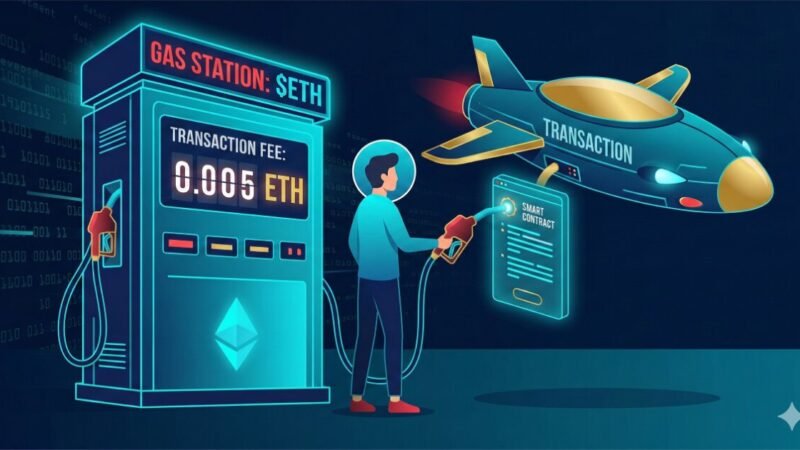
Linea charges gas in ETH for L2 execution, similar to Ethereum mainnet. The gas price adjusts dynamically based on block utilization. Additionally, each transaction incurs an L1 data cost proportional to the calldata size, since the sequencer must post transaction data to Ethereum for data availability.
The total fee paid by a user is L2 execution gas plus L1 data cost. For simple transfers, the L1 component dominates. For complex contract interactions with large calldata, both components matter. Developers optimizing gas costs should minimize calldata size using techniques like calldata compression or offchain computation with onchain verification.
Linea does not currently implement EIP-4844 blob transactions for cheaper data availability, though future upgrades may adopt this. Monitoring the fee market and comparing L1 data costs to other rollups helps users choose the most cost effective chain for their use case.
Worked Example: Token Bridge Withdrawal Flow
A user holds 10 ETH on Linea and wants to withdraw to Ethereum mainnet. They call the bridge contract’s withdraw function on L2, specifying the destination address and amount. The contract burns the 10 ETH on L2 and emits a withdrawal event.
The sequencer includes this transaction in the next batch, say batch 5000. The batch is posted to L1 and enters the proving queue. After 20 minutes, the prover finishes generating the proof and submits it to the L1 verifier contract. The proof verifies successfully, and batch 5000 achieves hard finality.
The user now calls the claimWithdrawal function on the L1 bridge contract, providing a Merkle proof that their withdrawal event is included in the finalized batch. The contract checks the proof against the stored state root, verifies the withdrawal has not been claimed, and transfers 10 ETH to the user’s address on L1. The entire process took 20 minutes for proof generation plus the time for the user to submit the claim transaction.
If the rate limit had been hit, the claim transaction would revert, and the user would need to wait until the next time window reset or the limit increased.
Common Mistakes and Misconfigurations
- Assuming full EVM equivalence without testing precompile behavior. Contracts using uncommon precompiles may fail or cost more gas on Linea.
- Waiting only for soft finality before crediting high value deposits. Exchanges should wait for proof verification to avoid reorganization risk.
- Ignoring bridge rate limits when designing withdrawal flows. Applications moving large volumes should batch withdrawals or design queuing mechanisms.
- Treating Linea as censorship resistant without a forced inclusion path. Applications requiring guaranteed execution should implement monitoring and fallback chains.
- Not accounting for L1 data costs in gas optimization. Calldata heavy transactions pay significantly more than on L1 alone.
- Relying on sequencer liveness without fallback. Single sequencer architecture means downtime halts all transaction processing.
What to Verify Before You Rely on This
- Current proof generation latency and batch finalization cadence. Check block explorers for recent batch submission and verification times.
- Bridge rate limit parameters on both L1 and L2 contracts. These are governance controlled and may change.
- Sequencer uptime and incident history. Review status pages and historical downtime to assess reliability.
- Precompile and opcode support for any non-standard contract functionality you plan to deploy.
- Fee market dynamics and gas price relative to other L2s. Compare total transaction costs including L1 data fees.
- Governance structure and decentralization roadmap. Understand who controls protocol upgrades and sequencer operation.
- Security audit history and bug bounty program. Review audit reports for the prover, bridge, and core contracts.
- Integration support from wallets, indexers, and oracles you depend on.
- Legal and regulatory posture of ConsenSys as the sequencer operator, especially if your application has compliance requirements.
Next Steps
- Deploy a testnet version of your contracts and run integration tests covering all precompiles and edge cases your code relies on.
- Implement monitoring for proof finalization times and bridge rate limits if your application depends on predictable withdrawal latency.
- Evaluate fallback strategies for sequencer downtime or censorship, such as supporting multiple L2s or maintaining L1 compatibility.
Category: Crypto News & Insights